The Golden Torch: Stoke-on-Trent’s Northern Soul Beacon
The Golden Torch (often simply “The Torch”) was a legendary nightclub in Tunstall, Stoke-on-Trent, that became a cornerstone of the Northern Soul scene in the early 1970s 1 . Housed in a former cinema on Hose Street, it evolved from a 1960s Mod club into a “world famous soul club” that drew devoted dancers from all over the UK. At its peak, the Torch hosted all-night dances that were the stuff of folklore – packed with rare soul music, spinning dancers, and an atmosphere so electric that many still speak of it with misty-eyed reverence decades later 2 . This in-depth look at the Golden Torch explores its early history, vibrant dancefloor culture, influential DJs, anthem records, live shows, rivalries, untimely closure, and enduring legacy on the Northern Soul movement.
Early History: From Church to “Mod” Nightspot (1964–1969)
The building that became the Golden Torch had a long history before soul took center stage. Tucked behind the Sneyd Arms Hotel in Tunstall’s Tower Square, it originally dated back to the 1820s as a church, later served as a roller-skating rink, and then operated as the Little Regent Cinema in the 1940s
3 . In 1964, local entrepreneur Chris Burton purchased the disused cinema and began transforming it into a nightclub. By January 1965, Burton unveiled the newly christened Golden Torch – named to evoke a grand, golden-lit image – with a gala opening night featuring Liverpool pop act Billy J. Kramer and The Dakotas as headliners 5 . The Torch’s early years firmly embraced the mid-60s Mod scene: the interior was done up as a stylish ballroom with marble pillars, ornate arches, and a balcony overlooking the dance floor 6 7 . A Roman chariot mural even adorned the outside wall, underlining the club’s “classy” décor 6 .
In its initial incarnation, the Torch was known as a hot spot for live music and youthful fashion. Weekly shows featured popular beat and R&B groups of the day – The Kinks and Wayne Fontana and the Mindbenders rocked its stage, as did Mod favorites like Amen Corner and other chart acts 5 . The clientele were fashion-conscious Mods in sharp suits and Ben Sherman shirts, eager to dance to the latest British R&B and Motown sounds. The club’s resident DJ in this period was the charismatic “Barmy Barry,” a local personality who treated DJing as entertainment with on-stage antics, while the music itself often took a backseat 9 . Even a young Peter Stringfellow – later a famous nightclub owner – held occasional DJ spots at the Torch during the 60s, spinning records between his engagements at other clubs 10 . At this stage, soul music was just one part of the mix; Motown and American R&B tunes were played, but the Torch had not yet fully dedicated itself to the rarer soul records that would define Northern Soul. That turning point arrived in 1967, when a visiting American duo, Inez and Charlie Foxx, performed live. Their gritty soul set “showed us all what Soul was all about,” Burton later reflected 7 . After that night, the Torch’s crowd increasingly hungered for authentic soul music, much like the patrons of Manchester’s famed Twisted Wheel club, and the venue began building a reputation as a home for soul aficionados 12 .
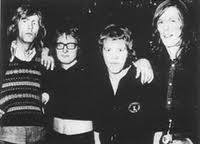
By 1969, the Torch was poised for a musical shift. Sensing the growing appetite for soul, a young local DJ named Keith Minshull approached Chris Burton with an idea: dedicate a regular club night entirely to soul records 13 . Burton was skeptical – the Torch had always featured live bands or showy DJ performances – but he agreed to let Minshull try a one-off Friday soul night. The result was a “resounding success” 13 . Instead of the usual stage showmanship, Minshull simply played a continuous stream of rare and danceable American soul 45s. Burton recalled arriving to find “a room full of kids dancing to music that I’d never heard of” – no gimmicks, just pure soul and an exuberant crowd 14 . It was a radically different vibe, and it tapped directly into an underground network of record collectors and dancers. The Golden Torch had lit the flame of what would soon be called Northern Soul, aligning itself with a burgeoning movement that celebrated obscure, uptempo soul tracks over contemporary chart hits 4 .
The All-Nighter Era: Northern Soul Takes Over (1970–1972)
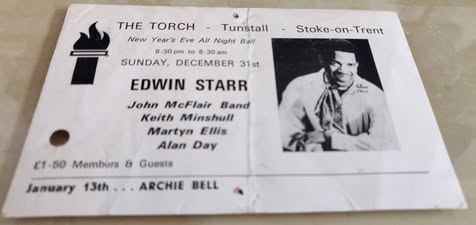
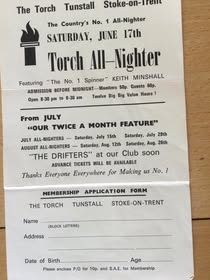
As the 1970s dawned, the Torch fully embraced its new identity as a temple of soul. Keith Minshull brought on his friend, 18-year-old Colin Curtis (real name Colin Diamond), to join him in DJing the club’s soul nights. The pair, soon nicknamed “the Kingspinners,” became the dynamic driving force of the Torch’s music policy 15 . They scoured the UK and even abroad for rare soul records, often working with legendary collectors like Simon Soussan – who supplied the Torch DJs with obscure U.S. soul singles pressed on tiny labels 15 . Every week, Minshull and Curtis introduced new discoveries to the dancefloor, delighting the crowd with songs no one had heard before. The Torch quickly earned a reputation as the place to hear unknown soul gems: if a record got first spun at the Torch, it instantly gained prestige in the Northern Soul circuit. Fellow DJs and soul fans from other cities began pilgrimaging to Stoke to experience these nights and to trade music. Before long, two more talented locals, Alan Day and Martyn Ellis, joined the roster, solidifying the Torch’s core DJ lineup for the soul era 16 .
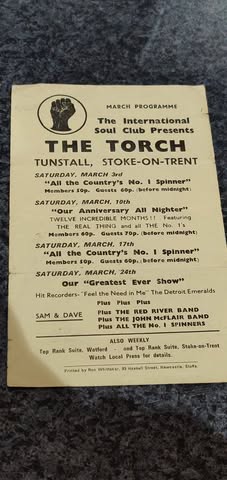
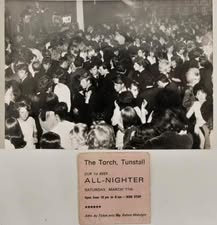
In 1970–71, the Northern Soul scene in England was at a crossroads. The Twisted Wheel in Manchester – the club widely regarded as the birthplace of Northern Soul – had been shut down by police in 1971 amid drug concerns and pressure against all-night dances 17 18 . This left a void in the scene. Sensing an opportunity, the Torch’s team decided to push the envelope further: they would hold allnighters of their own. Thus, on 11 March 1972, The Golden Torch hosted its first official Northern Soul all-nighter, running from 8 PM Saturday evening to 8 AM Sunday morning 19 . All through the night, DJs kept the dance floor packed with high-octane soul stompers while attendees danced non-stop, buoyed by adrenaline (and, for some, steady supplies of caffeine or amphetamines to fight off sleep). The all-nighter was a smashing success, and it became a weekly ritual at the Torch thereafter 20 .
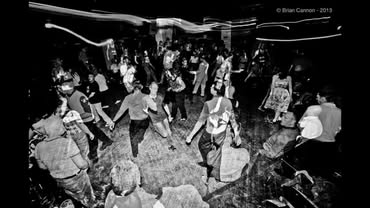
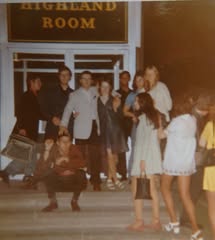
With virtually no competition at the time – Blackpool Mecca’s Highland Room was just starting to cultivate a soul night, and Wigan Casino had yet to open – the Torch swiftly ascended to the top of the Northern Soul circuit in 1972 20 21 . Word spread that the hottest soul action was now in Stoke-onTrent. Every weekend, young soul fans from across the North and Midlands undertook epic, convoluted journeys to Tunstall: crammed into cars, vans, or even coaches, they traveled through the night “from almost anywhere” to reach the Torch 22 23 . Some came from as far as London and Scotland, eager to be part of the all-nighter magic. The Torch’s official capacity was around 500–680 people, but far more tried to pack in. On one famous occasion in 1973, over 1,200 enthusiasts squeezed inside (with hundreds more reportedly left outside), even though the venue was designed to hold only about 500 24 25 . At full tilt, the club was literally bursting at the seams – the crush of bodies so intense that ventilation was poor and the floors grew slick with sweat. Yet, it was precisely this intensity that people remember fondly. As one account noted, every Saturday night “they cram hundreds of Soul folk inside,” and the venue would become a sweltering, jubilant mass of dancing bodies 26 . Regulars recall that movement on a crowded night was a collective affair – “the only way you can move inside the sticky hall is when the person next to you moves” 27 . The atmosphere at the Torch all-nighters was unparalleled; even jaded scenesters agreed the old ballroom had “one thing that so many places completely lack – Atmosphere!” 27 26 .
Club Atmosphere and Dancefloor Culture
Despite the heat, the crowds, and the infamously “lousy toilets”, the Torch’s atmosphere is legendary
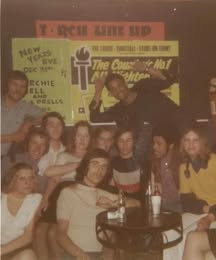
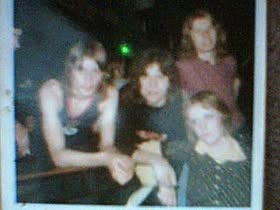
28 . Many veteran Northern Soul fans describe the Torch with almost spiritual devotion – not as a mere club, but “a place of worship” at the heart of the scene . The journey to the Torch became a treasured part of the experience. One attendee vividly remembered driving off the main road into a dismal side street of Tunstall on all-nighter weekends: “barely lit with terraced houses,” the quiet night would be broken only by a distant thump of bass 29 . “The music can be heard by a keen ear,” he noted – as you walked closer, you navigated by sound, “following your ears rather than your eyes”, until suddenly the throb of soul music led you to a glass double-door on Hose Street 30 . There, the sight of smiling staff in the foyer (a remnant of the old cinema lobby) welcomed revelers in from the darkness 31 . “All the other smiling faces that clog up the doorway…they are all smiling!” he observed of the ticket-takers and regulars greeting each other – a stark contrast to the typical nightclub with surly bouncers 31 . This cheerful welcome set the tone: The Torch’s management deliberately kept security low-key, with few heavy-handed bouncers, fostering a friendly, laid-back vibe 32 . “We have never filled the place with a lot of big bouncers looking for trouble – that’s why we have never had any trouble,” Chris Burton explained of their philosophy 32 . The young crowd respected the venue for this and in turn “looked after their club”, treating it like a second home 32 . Fights and theft were rare; united by a love of soul, the Torch’s patrons created a self-policing community that felt remarkably safe and welcoming.
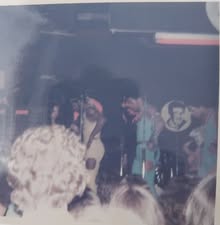
Inside, the layout of the Golden Torch was unique. Its past life as a cinema meant the main hall was long and rectangular, with a stage at one end and a balcony running along one side. Stately marble pillars lined the edges of the dance floor, some fitted with mirrors and outlined by strings of lights, reflecting the colored spotlights that blinked in time to the music 33 . The walls were painted black in later years (replacing the earlier “golden” trim of its 60s décor) to give the room a proper underground club feel 34 . Along the sides were padded bench seats and café-style tables where dancers could collapse with a drink between records. There was even an upstairs bar that was later expanded across the balcony to increase capacity without obstructing views of the stage 35 . But on a busy night, none of those fixtures – not the Western-saloon-like bar, nor the patterned carpet, nor the walls – were really visible. When the night was in full swing, you didn’t see the floor at all – only people, a sea of dancers lost in the music 36 . The room would literally shake from the pounding feet of hundreds of dancers executing spins and high-kicks in unison to the beat. A haze of cigarette smoke hung in the air, mixing with the sweet smell of spilled Coke and the musky tang of sweat and talcum powder (the latter often sprinkled on the floor by dancers to allow easier gliding spins). Dancers at the Torch, as in all Northern Soul clubs, had their own individual moves – some would do athletic back-drops and flips, others preferred shuffling footwork, and many just freestyled with joyous abandon. What united them was the energy: everyone danced all out. As one observer put it, “you feel this… this atmosphere. There’s really no other word for it.” 36 People were happy at the Torch; they were in their element and it showed on every smiling, sweat-drenched face.
The culture of the Torch extended beyond the dance moves. The fashion and style of the crowd was also a key part of the atmosphere. Early on, many came in typical Mod attire or smart casual dress – button-down shirts, slacks or miniskirts, polished shoes – wanting to look sharp. With the advent of allnighters, practicality and personal expression took over. It wasn’t unusual to catch whiffs of Brut aftershave or hairspray as dancers zoomed past 28 . Both guys and girls sported inventive hairstyles (some quite “strange ones indeed” by the era’s standards) 28 . Outfits ranged from tailored suits and Spencer’s jackets to sporty attire; crisp Ben Sherman shirts were a particular favorite for many young men 28 . As the Northern Soul scene’s signature look evolved, some Torch regulars adopted the flared Oxford bag trousers and badged vests that would later become ubiquitous at Wigan Casino – allowing greater freedom of movement for acrobatic dancing and showcasing sewn-on patches of their favorite soul clubs. At the Torch, club pride was strong: members often wore the club’s emblem, a flaming torch logo, either as a metal badge or patch. The Torch had its own membership cards and enamel badges, and to wear one on your jacket was a badge of honor (literally) in the Northern Soul community . Among the dancers themselves, a tight-knit camaraderie formed – regulars earned nicknames on the scene (characters like “Tombo,” “Sparky,” “Nogger,” and “Millie” became local legends on the Torch dancefloor) 37 . Many arrived as strangers but left as lifelong friends, bonded over the shared “joy of being young” and living for the love of soul music 28 . The Torch on a Saturday night truly felt like a family gathering of soul brothers and sisters. It became a meeting place where devotees from different cities – Liverpool, Birmingham, Nottingham, Leeds, you name it – could exchange rare records, debate the merits of different Motown B-sides, and teach each other new dance steps 32 . In the pre-Internet age, The Golden Torch and clubs like it were the social networks of the Northern Soul scene: you went to catch up on the latest sounds and news, to trade records or patches, and to be among people who “feel anything [and everything] soul music” just as deeply as you do 38 .
DJs and Signature Sounds of The Torch
If the dancers were the lifeblood of the Torch, the DJs and their music were the heart and soul. The venue was famed for its roster of gifted DJs who curated the Torch’s distinctive sound. Keith Minshull, the originator of the soul nights, became the club’s principal tastemaker, with an uncanny ability to pick records that would send the crowd into a frenzy. Alongside him, Colin Curtis (who started as a wideeyed teenager at the Torch) honed his craft and would later be celebrated as one of Northern Soul’s greatest DJs. The trio of Minshull, Curtis, and their compatriots Alan Day and Martyn Ellis formed the core DJ team that kept the Torch blazing 16 . They were soon joined by other notable spinners: Tony Jebb, a DJ from the Midlands, became a regular guest, and even Ian Levine – a young DJ from Blackpool – did a few spots, long before he gained fame at the Blackpool Mecca 20 . This collective of DJs brought different flavors, but all had a common mission: to break new soul records and surprise the dancefloor. It was said that the Torch DJs never played anything currently on the charts; their focus was almost exclusively on rare American soul imports from the 1960s – typically fast-paced, dramatic, and perfect for dancing.
Night after night, these DJs would unveil unknown tracks, often covering up the record labels to keep their discoveries secret from competing DJs (a common practice in the scene). The Golden Torch became a veritable goldmine of soul discoveries, and many songs that are now Northern Soul classics had their UK debut on the Torch’s turntables 39 . Some of the most famous Torch anthems include:
- “Sliced Tomatoes” – Just Brothers: A funky instrumental with a huge beat; dancers at the Torch ate it up 40 . (Decades later, it found new life when sampled in a Fatboy Slim hit, but Northern Soul fans knew it first at the Torch.)
- “Quick Change Artist” – The Soul Twins: An elusive Detroit soul 45 that became a Torch crowdpleaser 40 . Its stomping rhythm and catchy chorus exemplified the Northern Soul sound.
- “Love You Baby” – Eddie Parker: This adrenaline-charged track (with Parker’s searing falsetto) was unearthed by Torch DJs and became a Holy Grail of the scene 41 – so popular that original copies now fetch huge sums.
- “Times a Wasting” – The Fuller Brothers: Another Torch spin that had dancers flipping on the floor with its upbeat groove
- “Bok to Bach” – Father’s Angels: A quirky, uptempo number with a baroque-inspired hook – its first plays at the Torch left people asking “What is that song?” as they rushed to the DJ booth
- “Just Like The Weather” – Nolan Chance: An impassioned soul stomper introduced at the Torch that became an anthem for the emotion it brought to the dancefloor
- “One in a Million” – Maxine Brown: A 1960s soul cut by Brown that, thanks to the Torch, enjoyed a second life as a Northern Soul favorite
- “Thumb a Ride” – Earl Wright: This exuberant track about hitch-hiking was a perfect all-nighter tune and was first championed at the Torch
- “Just Ask Me” – Lenis Guess: A smooth, foot-tapping groove that Torch DJs helped popularise
- “Free for All” – Phillip Mitchell: An uptempo stormer that became so synonymous with the Torch that local radio listeners still request it decades later
These are just a handful of examples – the list of Torch “firsts” goes on and on. According to one retrospective, “14 original tracks [were] culled from the legendary [Torch] playlist” for a commemorative album, underscoring how many rare soul treasures were associated with the club . The DJs took pride in the Torch’s reputation as an incubator of rare soul hits. Many a song that failed to chart in the US, or was forgotten after release, found new life on the Torch dancefloor – a phenomenon that amazed some of the American artists years later when they learned their obscure B-sides were massive in a little town in England.
Musically, the Torch’s sound was rooted in the classic Northern Soul template established at the Twisted Wheel: uptempo, four-on-the-floor beat; dramatic vocals or hooks; and an overall emotive, uplifting vibe. But the Torch DJs continually pushed the envelope, bringing in faster tempos and ever more obscure choices. They played everything from gritty, foot-stomping Motown-style dancers to soaring, orchestrated soul ballads (as long as the beat was danceable). A typical Torch all-nighter set might include stomping tracks like Larry Williams & Johnny Watson’s “Too Late” (a big Torch favorite)
51 , floor-fillers like “Seven Days Too Long” by Chuck Wood (an old Twisted Wheel hit still welcomed at the Torch) 33 , alongside newly uncovered obscurities like The Sequins’ “A Case of Love” or The Tomangoes’ “I Really Love You”. Motown hits were usually avoided (they were too well-known and “mainstream” for this crowd), though an occasional nod to the Supremes or the Four Tops might slip into early evening sets. Instead, the Torch dancers prided themselves on being connoisseurs of deeper cuts – if you danced at the Torch, you were hearing records that few others in the country knew about, and you could brag about that knowledge at other venues.
Live Performances: Soul Stars Under the Spotlight
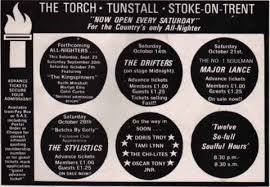
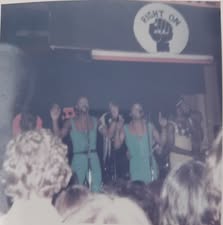
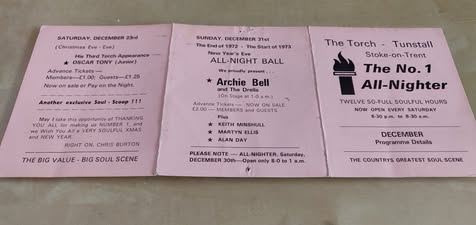
While DJs and records were the main attraction, The Golden Torch also featured live performances by soul artists, which added to its fame. In fact, the Torch in its Northern Soul heyday managed to book an impressive roster of American soul and R&B acts, often as a highlight of the all-nighter events. These live gigs usually took place in the middle of the night, giving dancers a short breather (or simply a chance to cheer while still dancing in place). Some of the big-name artists who graced the Torch’s stage included vocal group The Drifters, Motown legend Edwin Starr, Chicago soul troupe The Chi-Lites, the smooth Philadelphia hitmakers The Stylistics, and saxophone-blaring Motown band Junior Walker & the All Stars 52 53 . It was quite a coup for a provincial club to host artists of this caliber – many of whom had UK chart hits – and it speaks to Chris Burton’s clout as a promoter (earning him the moniker “the genius behind the Torch” in one local’s opinion) 54 .
Some live acts were tailor-made for the Northern Soul crowd and went over brilliantly. For example, Oscar Toney Jr., an American soul singer with a deep, gospel-influenced style, wasn’t a household name, but at the Torch he received a hero’s welcome and always “went down well” 55 . His performances of tracks like “Turn On Your Love Light” had the whole club clapping and singing along, proving that even lesser-known artists could become stars on the Northern scene. On the other hand, there were instances where famous acts didn’t quite meet the dancers’ expectations – the Torch crowd had particular tastes. The Stylistics, known for their silky-smooth falsetto ballads, actually “didn’t go down too well” at the Torch 56 . Their polished, slow love songs, which were huge pop hits, weren’t as suited to the hard-driving tastes of an all-nighter audience that craved uptempo beats. Still, the novelty of seeing these U.S. stars in the intimate, sweaty confines of the club was unforgettable.
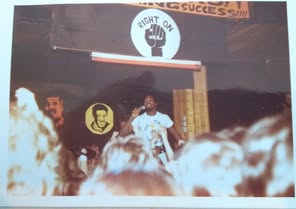
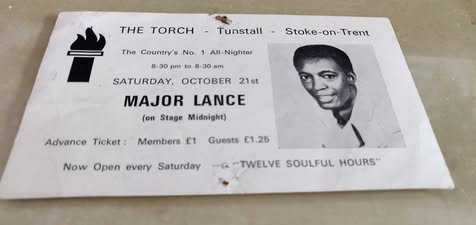
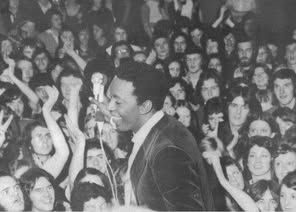
The most celebrated live performer in Torch history was undoubtedly Major Lance. A 1960s soul star with hits like “Um, Um, Um, Um, Um, Um,” Major Lance had a special relationship with the UK soul scene. On 9 December 1972, he performed at the Torch in what would become an almost mythical night 57 . The club was filled beyond capacity – in fact, “there were almost as many people outside trying to get in as there were inside,” Burton noted of the demand 58 . Major Lance did not disappoint: he delivered a thrilling set of his greatest hits, feeding off the frenetic energy of the crowd. The atmosphere was so electric that it was decided to record the show live. Tapes rolled as Lance worked the audience into a frenzy with numbers like “The Monkey Time” and “Hey Little Girl.” The result was released on the UK Contempo label (run by Blues & Soul magazine) as the album “Major Lance Live at The Torch”, giving the Torch the unique distinction of being one of the only Northern Soul clubs to have its own live album 57 . To this day, fans regard that LP – with the sounds of crowd clapping and feet stomping in the background – as a precious time capsule of the Torch’s glory. Burton called the live recording “something of a landmark in our history, a sort of recognition for what we are doing” 59 . Major Lance himself became like an honorary king of the Torch; the “greatest reaction the club has ever given” was to him, Burton said, and it even “broke an existing gate record” for attendance 58 . Indeed, when Lance launched into his track “You Don’t Want Me No More” that night, the roar from the crowd was so loud it nearly drowned out the music.
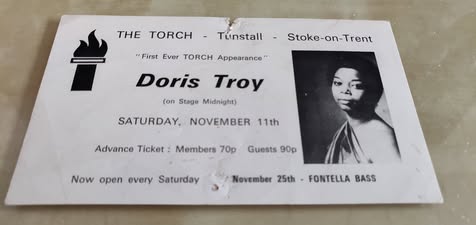
Other U.S. soul acts who played The Torch included J.J. Barnes (whose “Sweet Sherry” was a Northern hit), Fontella Bass (of “Rescue Me” fame), and James & Bobby Purify, among others 60 53 . The club’s willingness to book these acts showed how serious it was about soul music. These performances also forged a direct connection between the American originators of the music and the British subculture that adored it. For the young people packed on the Torch’s dancefloor, seeing their American soul heroes in person was a transcendent experience – a moment when Stoke-on-Trent felt like the center of the soul universe. Many recall these nights with awe, describing how artists would be astonished at the sight of hundreds of British kids dancing and singing along passionately to songs that had been obscure back home. In one interview, Major Lance expressed how the energy at the Torch made him feel like he was “Michaelangelo” painting the Sistine Chapel, with the devotees below truly understanding his art 61 (a playful comparison made by a local journalist, but apt in conveying the reverence the crowd had for him). These live shows cemented the Torch’s status not just as a club, but as a cultural venue where soul music history was being written in real time.
Fashion, Friendship and the Northern Soul Movement
The impact of The Golden Torch extended beyond music and dancing; it played a pivotal role in shaping the culture of Northern Soul, influencing everything from fashion trends to the sense of community that defined the movement. In the early 1970s, Northern Soul was more than a music scene – it was a way of life for its adherents, and the Torch was one of the places where this lifestyle crystalized.
Fashion at the Torch mirrored the transition of Mod into Northern Soul style. On any given all-nighter, one would see a fascinating mix of attire. Some dancers clung to the classic Mod look: well-tailored suits or dresses and polished shoes, maintaining a dapper appearance even at 3 AM. Others opted for a more relaxed get-up tailored for intense dancing: baggy Oxford bags trousers, loose-fitting polo shirts or vests emblazoned with sew-on patches (trophies of attended all-nighters), and athletic footwear that provided good grip for spins. The women often wore flared skirts or comfortable slacks instead of the constricting mini-dresses of mainstream fashion, to allow them to dance with ease. What everyone shared was a certain pride in presentation – whether you were in a smart shirt or a tank top, you carried yourself with soulful swagger. As one Torch regular nostalgically enumerated, memories of the club involve “the heady smell of Brut [aftershave], the hairstyles (some strange ones indeed), Spencer’s [jackets], Ben Sherman’s [shirts] and the sheer joy of being young” 28 . In other words, Northern Soul culture at the Torch celebrated individual style: if your hair was long or cropped, if your pants were high-waisted or flared, it was all good as long as you could dance and you loved the music. Many attendees personalized their look with club memorabilia – the Torch’s flame logo appeared on badges worn on lapels or handbags. Some even had bespoke bowling shirts or satin jackets with “Golden Torch” embroidered on the back. This pride in the venue and the scene fostered a kind of tribal identity among Northern Soul fans. Much like football supporters wearing team scarves, soul fans wore patches of the Torch, Wigan Casino, or the Twisted Wheel as badges of allegiance.
Friendships and camaraderie were at the heart of the Torch’s influence. Because fans traveled from far and wide, the club became a melting pot of regional British youth. On a given night, you might find lads from Manchester trading dance steps with girls from Wolverhampton, or a group from London laughing in the corner with mates from Derby. Social class and background melted away on the Torch dancefloor – what mattered was your enthusiasm for the music and whether you knew the latest rare tracks. The Torch was famously welcoming; as noted, its lack of aggressive security and the genuine warmth of its staff made it a place where young people felt at home even if they were 50 miles from their actual home 32 . Regulars formed tight bonds, planning meet-ups at the club week after week. They would stake out their favorite spot on the dancefloor or gather at a particular table to chat and refill their energy with a soft drink. Many reminisce that the Torch was “a kind of meeting place” where they would “come from all over the country – to talk about the rare records and the artists” they loved 62 . The shared passion for obscure soul music created instant friendships; someone might approach you to ask “What’s that track the DJ just played?” and an hour later you’d be friends for life, hitchhiking together to the next all-nighter.
This spirit of community also manifested in more organized ways. The Torch inspired the formation of soul clubs and societies across the country. Fans who met at the Torch often stayed in touch through letters or phone calls, sharing new record finds. Some started their own local soul night events, effectively spreading the Northern Soul gospel back to their hometowns – thus the Torch helped propagate the culture. It wasn’t just about one club; it was about a movement of young people united by music that mainstream culture had forgotten. The Torch provided a template that other venues and promoters would follow: it demonstrated that, with the right DJ and the promise of rare soul and an allnight dance, you could attract a devoted following. The club’s success directly influenced the opening of other all-nighter venues (or conversion of existing dancehalls into soul venues) in the years that followed.
In terms of broader movement influence, The Golden Torch is often credited, alongside the Twisted Wheel, with shaping Northern Soul into a nationwide phenomenon. Historian Dave Godin (who actually coined the term “Northern Soul”) noted that by the early ’70s a cult of rare soul had taken hold in the North and Midlands, and clubs like Wigan Casino, Blackpool Mecca and the Golden Torch were its spiritual hubs 63 64 . The Torch, in particular, filled the gap between the 1960s Mod era and the mid-’70s explosion of Northern Soul’s popularity. As one compilation album liner put it, “Northern Soul was born in the Twisted Wheel, Manchester, but it came of age in the Golden Torch ballroom” 4 . The meaning is clear: the Torch is where the scene matured, where the all-nighter tradition was solidified, and where the nucleus of what we now know as Northern Soul – the music, the dance, the camaraderie – was refined and re-energized for a new decade.
Rivalries and Relationships: The Torch, Wigan Casino, and Blackpool Mecca
Within the Northern Soul world, there was both a strong sense of community and a natural rivalry among clubs – each venue vied to have the most loyal crowd, the best DJs, and the rarest records. The Golden Torch’s reign in 1972–73 inevitably drew comparisons to past and future soul meccas. While the Torch was in operation, its biggest peer was the Blackpool Mecca (specifically, the Highland Room at the Mecca), and after the Torch’s closure, the mantle was taken up by Wigan Casino.
During the Torch’s heyday, the Blackpool Mecca (located about 70 miles north in Blackpool) was also hosting soul nights (from around 1971 onward) 65 . The Mecca’s DJs – notably the very same Ian Levine who occasionally spun at the Torch, and his partner Colin Curtis (yes, the same Colin, who after the Torch’s end began a famous residency at Blackpool) – cultivated their own crowd and style. For a time in the early ’70s, the Torch and the Mecca coexisted without direct conflict, as they were geographically apart and held events on different nights (many hard-core fans even attended both). If there was any rivalry, it was a friendly rivalry in trying to “outdo” each other with exclusive new records. A record broken at the Torch one week might get picked up and played at Blackpool the next, and vice versa – and there was certainly a bit of competitive pride in who found it first. Stories abound of collectors offering certain rare singles to one venue and not the other. Still, the real rivalry in Northern Soul lore would come later, between Wigan Casino and Blackpool Mecca in the mid- to late ’70s, when those two giants diverged in musical policy (Wigan clinging to the oldies, Mecca embracing some contemporary soul). In that famous split, Torch alumni found themselves on both sides: Colin Curtis at Blackpool championing new sounds, and others like DJ Russ Winstanley at Wigan keeping the faith with the old sounds 66 67 . But in Torch’s era, 1972–73, the club stood largely unchallenged as the premier all-nighter spot – “the country’s No.1 soul venue” by 1972, as one Blues & Soul magazine article declared 21 .
When Wigan Casino opened in September 1973, the Golden Torch had already closed (by mere months). Thus, the two never truly operated in parallel – you wouldn’t drive to Wigan one week and Torch the next, because the Torch was gone by the time Wigan’s famous all-nighters began. However, there’s an argument to be made that Wigan Casino’s rapid rise was built on the foundation laid by the Torch. In fact, one could view them not as rivals but as successive chapters in the Northern Soul saga: the Torch’s closure left a void that Wigan Casino eagerly filled 68 . Many Torch regulars from Stoke, Birmingham, and the Midlands who suddenly lost their weekly home in March 1973 started traveling to Wigan Casino that autumn, bringing their enthusiasm (and even some of their records and dance styles) with them. Wigan’s organizer, Russ Winstanley, was well aware of the Torch’s legacy – he has credited venues like the Torch for paving the way and often invited Torch DJs and dancers to Casino events in the early days. One might say there was a passing of the torch (pun intended) from The Golden Torch to Wigan Casino, ensuring continuity of the scene.
That said, among devoted soul fans there were always debates: Which was better, the Torch or the Casino? Who had the best music, Stoke or Wigan or Blackpool? In truth, each club had its unique flavor and loyalists. The Torch’s strength was that it came at a formative time and had an intimate, family-like vibe that people cherished. Wigan, being much larger and lasting into the late ’70s, became more famous internationally and attracted a massive membership. Some of the old-timers would nostalgically claim that Torch had the purity – an authenticity of the early scene – whereas later venues commercialized things a bit. On the other hand, fans who caught the tail end of Torch and then went to Wigan often loved both, viewing the Casino as the rightful successor once local authorities snuffed out the Torch.
The geography and logistics also played a role. The Torch was somewhat off the beaten path in Stokeon-Trent, not a major city for nightlife, which meant it required determination to get there (trains to Stoke followed by local buses or drives to Tunstall). Wigan Casino, in comparison, was in a town center with a train station nearby and better motorway access, making it easier for large numbers to attend
51 . As one retrospective noted, “ultimately, the difficult location proved to be the downfall of the Torch as attentions shifted to the newly opened Wigan Casino in 1973, with far better transport links and much greater capacity” 51 69 . In that sense, Wigan didn’t so much compete with the Torch as replace it, offering what the Torch could not when it was forced to close – a bigger venue and official approval to run all-nighters (at least for a while).
Interestingly, many of the same names weave through the narratives of all these clubs. DJs like Ian Levine and Colin Curtis cut their teeth at the Torch and then were central to Blackpool Mecca’s story. Records that surfaced at the Torch would later echo as staples at Wigan Casino. Even dancers and their signature moves migrated from one venue to the next. In Northern Soul, rivalry often went hand-inhand with overlap; it was one large community with different gathering spots over time. Thus, while one can talk about Torch vs. Casino in affectionate terms (which did something better), the prevailing sentiment among those who experienced it is gratitude that all these places existed in succession, keeping the faith alive. When the Torch fell, Wigan picked up the banner – and in later years, when Wigan fell, other venues would do the same. As one era ended, another began, but the spirit of Northern Soul remained unbroken.
The Closure: How The Torch Was Extinguished
Tragically, the Golden Torch’s blazing run was short-lived. By early 1973, the very qualities that made the Torch a success – its massive crowds and all-night parties – also made it a target for local authorities. Britain in the early 70s was not entirely comfortable with the idea of hundreds of young people dancing through the night, and there was increasing pressure from law enforcement and local councilors to rein in the Northern Soul all-nighters (just as had happened to the Twisted Wheel in ’71) 70 . The Torch had drawn police attention for some time: officers would frequently be posted outside during all-nighters, monitoring the comings and goings. Occasionally they conducted raids or pat-downs, hoping to catch people with drugs. Indeed, like much of the Northern Soul scene, amphetamine use (to stay awake and energized) was fairly common among a segment of the Torch’s patrons, and this fact was not lost on the press or police. The local newspaper began running alarmist headlines in early 1973, branding The Torch as a “drug centre” and claiming that “70 percent of club users [were] involved with drugs” 71 . Such figures were likely exaggerated, but they fueled public concern. Nearby residents also complained about the all-nighters – not just the noise of music, but odd grievances like one man’s claim that “the allnighters kept his horse awake” at night 72 .
Chris Burton did his best to cooperate and appease the authorities. He enforced strict no-alcohol rules after hours (though some sneaked drinks, as evidenced by those sticky floors), and tried to clamp down on open drug use. By law, the club needed to renew its public performance and drinking license periodically. The crunch came on 16 March 1973, when The Golden Torch’s license came up for renewal in front of Stoke-on-Trent’s council licensing committee 73 . Despite Burton’s efforts and the passionate support of Torch regulars, the council refused to renew the club’s license for late-night dances 73 . The reasons cited were the frequent overcrowding, safety concerns, and the unsavory reports of illicit activity. Essentially, the establishment viewed the Torch as a public nuisance by that point – an image sadly far removed from the joyous reality its patrons experienced on the dancefloor. Faced with the loss of the license, the Golden Torch had no choice but to cease operations as an all-night venue.
What is striking is how abrupt the end was. There was no grand finale, no last hurrah to celebrate the Torch’s contributions. After the March 1973 license denial, the club simply couldn’t open for further allnighters. Rather than attempt an appeal that might drag on legally, Burton bowed to the inevitable and shut the doors. “The club just faded away,” one account recalls; “there was no celebratory last allnighter” 74 . Resident DJ Dave Evison later said, “It just fizzled out,” describing how unceremoniously the Torch era ended 75 . One week the regulars were planning their next trip to Stoke, and the next week they were reading the devastating news that their beloved club was done for. It was a heartbreaking moment for the Northern Soul community – many could not believe that their sanctuary was gone after only a year of all-nighters (indeed, the Torch’s Northern Soul phase had lasted a mere 18 months or so) 76 . Some fans protested or wrote letters to the council, but it was too late.
The physical aftermath of the Torch was also somber. The building stood vacant for a while after 1973. At some point in the years that followed, it caught fire and burned down, an eerie fate it shares with Wigan Casino (which burned down a few years after its 1981 closure) 77 . The once lively Hose Street venue became just an empty lot, a ghost of Northern Soul past. For decades, there was nothing marking the spot except memories. Only in recent years did efforts succeed in commemorating the Torch’s historical significance. Local soul enthusiasts – including a former Torch barman, John O’Brien, and his friend Steve Hoskins – campaigned to get a plaque installed on Hose Street 73 . Eventually, their persistence paid off. Today, a round black-and-gold plaque proudly declares “The Golden Torch, 1964–1972, World Famous Soul Club” at the site
. It stands as a testament that, yes, something extraordinary once happened here. (Initially the city was indifferent to the idea, which frustrated fans who noted that Stoke-on-Trent readily honours footballers and industrialists, but not its youth culture landmarks 78 . Thankfully, the Northern Soul community’s voice won out in the end.)
Despite its premature end, the closure of the Torch was not the end of Northern Soul – far from it. In fact, as noted, within six months, Wigan Casino had started its all-nighters in September 1973, effectively picking up where the Torch left off 68 . Many Torch faithfuls simply redirected their allnighter pilgrimages to Wigan. The transition was almost seamless: one could say the torch was passed (in a literal sense) to the Casino, which then enjoyed an 8-year run as the epicenter of Northern Soul until it too was forced to close by authorities in 1981 68 . The scenario was almost cyclical – a reminder that while venues may be temporary, the scene and culture persist.
Legacy of The Torch: A Lasting Flame in Northern Soul History
Although The Golden Torch’s time as a Northern Soul venue was brief, its impact and legacy loom large in the history of the movement. In the pantheon of Northern Soul clubs, the Torch is often mentioned in the same breath as the Twisted Wheel and Wigan Casino – a foundational venue that shaped the direction of the scene.
One of the Torch’s key legacies is the music it championed. Many soul records that might have remained footnotes in history were resurrected by the Torch and went on to become beloved classics. The tradition of digging up forgotten American soul gems was supercharged at the Torch, fueling a record-collecting fervor that still defines Northern Soul culture today. When fans talk about “Torch tunes,” they refer to a certain cachet – records like “Bok to Bach” or “Just Like The Weather” carry the mystique of having been broken at the Torch first. In later years, countless compilation albums, books, and DJ sets have paid homage to the Torch’s playlist. For example, the Outta Sight record label released The Golden Torch Story compilation, and another series titled “The Northern Soul Story, Vol. 2: The Golden Torch” focuses entirely on songs from the club’s era 79 . This preservation of the Torch’s musical legacy means new generations of soul fans continue to discover the magic of those Torch anthems, long after the physical club is gone.
The DJs who cut their teeth at the Torch also carried its legacy forward. Colin Curtis, for instance, went on to a hugely influential career (at Blackpool Mecca and beyond), and he often credits the Torch as the place that launched him and honed his style. Keith Minshull remained a respected figure in the scene and has appeared at many reunion events and retrospectives, always introduced as “ex-Torch DJ.” When Northern Soul reunion nights or anniversary events take place in the Midlands or North, Torch veterans are frequently involved – spinning the same vinyl they once spun in Tunstall and telling stories of the old days. In interviews and oral histories, these DJs and dancers keep the Torch’s spirit alive. The Torch All-Nighter Reunion events (such as one held in 2015 in Stoke) bring together original attendees, now middle-aged or older, to celebrate the club’s memory with all the same music and even some of the original dance moves. Such events demonstrate the lasting friendships and bonds formed at the Torch: people who met as teens at the club still reunite decades later under the banner of Northern Soul, reminiscing about “the good old days” when they danced at The Golden Torch until sunrise.
Culturally, the Torch’s legacy is also evident in how it helped solidify Northern Soul as a distinct youth subculture. The club played a crucial role in the evolution from Mod into Northern Soul – showing that even as the Swinging Sixties ended and trends moved on, there was a dedicated following for this soul music underground. By keeping the flame burning in that transitional period (1969–1973), the Torch ensured that Northern Soul wasn’t just a 60s Mod fad, but rather its own enduring scene with unique practices (like all-nighters, dance styles, etc.). It influenced the fashion (as discussed) and more importantly the attitude of the scene – emphasizing inclusivity, passion for music over commercial hype, and a DIY ethos (since the scene was built by the fans for themselves, outside of the mainstream). These values carried on to later venues and even resonate in contemporary Northern Soul revival scenes.
In Stoke-on-Trent and the Midlands, the Torch’s memory holds a special pride. Locals often point out that their city was as important to Northern Soul as Manchester, Wigan or Blackpool. In fact, a BBC radio host once declared “Stoke-on-Trent is still the No. 1 city for Northern Soul” even thirty years after the Torch closed 80 – a bold claim, but meant to acknowledge that the Torch ignited something that remained in the area’s cultural DNA. To this day, Stoke has soul nights and all-nighter events, and many trace their lineage back to the Torch. Some of the children or grandchildren of Torch-goers have themselves become Northern Soul enthusiasts, inheriting record collections and stories from their elders. It’s not uncommon to hear at a soul night in Stoke someone say, “My mum (or dad) went to the Torch, and I grew up hearing these records at home.”
On a broader scale, the story of The Golden Torch has entered the mythos of British club culture. It may not be as universally known as, say, the Cavern Club or the Hacienda, but within the realm of dance music history, the Torch is iconic. In 1978, Wigan Casino was famously voted “the world’s best disco” by Billboard magazine – but ask any Northern Soul devotee and they’ll tell you the groundwork for that honor was laid by clubs like the Torch and the Wheel before it. The Torch is often cited in documentaries, books, and films about Northern Soul. For instance, the film Soul Boy (2010) – while centered on Wigan Casino – makes reference to the wider scene that included the Torch. The legend of the Torch even includes whimsical lore: some say that on quiet nights in Tunstall you can almost hear the echo of a soul record playing where the club stood, or see the shadow of dancers when no one is there 81 . Such romanticism underscores how much the Torch means to those who were part of it.
In summary, the Golden Torch’s legacy is one of a trailblazer. It took a fledgling scene and gave it a grand stage (albeit a stage with marble pillars and a sprung floor). It proved that Northern Soul could command huge, fervent crowds, setting the scene up for even bigger things. It left an indelible mark on music (through the records it broke), on people (through the memories and friendships it forged), and on pop culture history (as an early superclub before the term “superclub” existed). The Torch’s flame burned intensely for a short time, but its light has never truly gone out. In the hearts of its “worshippers” – those hundreds who danced under its roof – the Torch remains forever, a golden beacon in their youth. And in the continuing story of Northern Soul, every all-nighter that plays a Just Brothers or Eddie Parker track is, in a way, keeping the Torch burning. The club may be long gone, but the spirit of The Golden Torch still illuminates Northern Soul’s past, present, and future.